
Call the number above now
Get connected to a licensed plumber for drain cleaning, same day.
We’re a dispatch service, not a call center reading from a script: every call connects you directly with a licensed, insured local plumber who handles kitchen, bathroom, floor, and main-line drain clogs.
Can I get drain cleaning near me today? Yes. Whether it’s a slow kitchen sink, a backed-up shower, or a main line affecting multiple fixtures, we can connect you with a local plumber for same-day service in most areas.
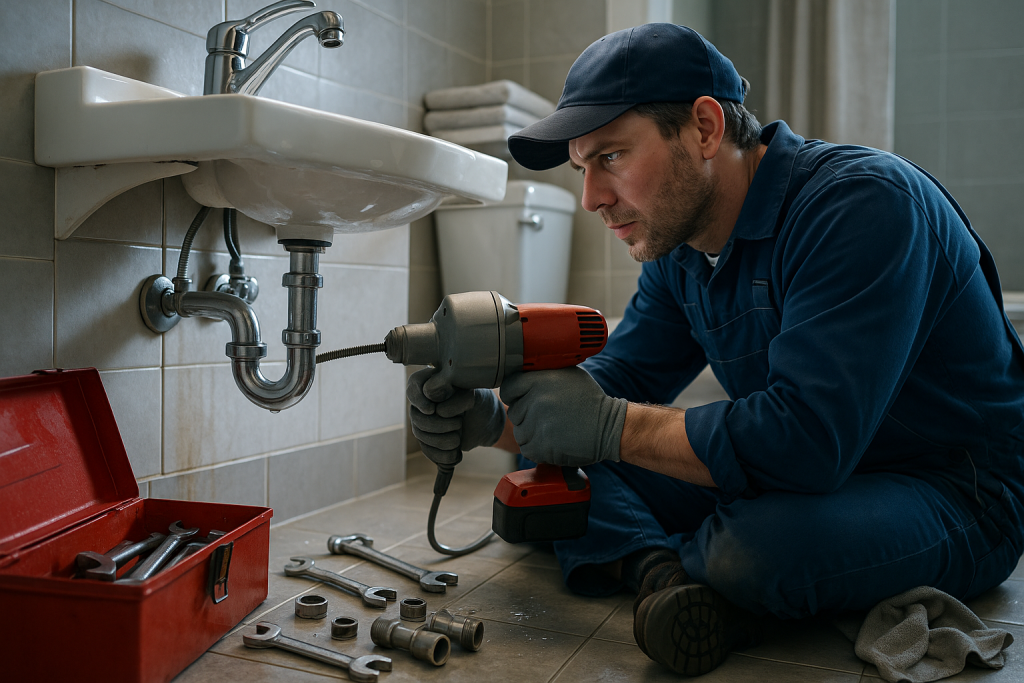
Warning Signs You Shouldn’t Ignore
A slow drain rarely fixes itself. These are the signals worth acting on:
| What You Notice | What It May Point To |
|---|---|
| Water draining slower than usual | Buildup inside the pipe or a partial clog |
| Standing water in a sink, tub, shower, or floor drain | A blockage restricting normal flow |
| Gurgling sounds from drains or toilets | Trapped air from poor drainage or a deeper line issue |
| Bad odors coming from the drain opening | Organic buildup, stagnant water, or sewer gas concerns |
| Water backing up when another fixture is used | A larger drain line problem affecting multiple fixtures |
| Frequent clogs in the same area | Recurring buildup or a pipe condition that needs attention |
| Overflow around floor drains or utility drains | A backup that should be checked quickly |
See signs your drains need cleaning urgently for the full breakdown of these warning signs.
One slow sink is usually a local blockage. Multiple slow drains, a strong sewer smell, or backup through a lower-level drain point to something bigger further down the line — and should be checked quickly.
What Actually Causes Drains to Clog
In kitchens, grease is the most common culprit — it goes down as a liquid, then cools and hardens inside the pipe, trapping food scraps and soap as it narrows the line. See how grease affects kitchen drain pipes for more. In bathrooms, hair and soap residue are the usual cause — see how to remove hair buildup from drains. Cold weather makes both worse: why drains clog more in winter covers why grease hardens faster and household plumbing sees heavier seasonal use.
Products labeled “flushable” are a common hidden cause of clogs and sewer backups — wipes, paper towels, and similar materials frequently fail to break down the way toilet paper does, even when the packaging says otherwise. This is a well-documented issue among water utilities nationwide, not a myth.
Already Have a Clog? Try This First
Before calling for service, some clogs respond to safe, simple methods. Home remedies for clearing blocked drains covers what’s worth trying yourself — and common causes of slow draining sinks can help you figure out whether the problem is something a DIY fix can actually solve, or one that needs a professional.
Chemical drain cleaners are worth a caution here: they often don’t clear the full blockage, and they can be harsh on older or already-compromised pipes. If a clog is stubborn, recurring, or already causing backup, it’s safer to call a plumber than to keep pouring chemicals down the drain.
How Professional Drain Cleaning Near Me Works
A plumber starts by identifying which drains are affected and how long the problem has been happening. From there, the method depends on the location and severity of the clog — professional augering clears most blockages, while deeper or recurring clogs may call for stronger tools or a closer look at the pipe’s condition. After clearing the line, the drain is tested to confirm the fix actually held.
What Does Drain Cleaning Cost?
Cost depends on the location and severity of the clog — a single slow sink costs far less to clear than a main-line backup affecting multiple fixtures. A fair quote includes a free estimate before work begins and no added cost without your approval first.
Licensed, Insured, and Verifiable
Every plumber we connect you with carries active licensing and liability insurance. You’re welcome to ask for proof of both before any work begins.
Preventing Future Clogs
- Avoid pouring grease, oil, or fat into kitchen sinks — let it cool and dispose of it in the trash instead
- Use drain strainers in sinks, showers, and tubs, and clean them often
- Remove visible hair from drain covers before it moves deeper into the line
- Keep wipes, paper towels, and hygiene products out of the toilet, regardless of packaging claims
Frequently Asked Questions
How do I know if I need professional drain cleaning?
If a drain keeps clogging, water drains slowly, bad odors persist, or water backs up into a sink, tub, shower, toilet, or floor drain, it’s time to call a plumber. Multiple slow drains at once can point to a larger issue.
Can I use chemical drain cleaner first?
You can, but it often won’t clear the full blockage and can be harsh on some pipes. If the clog is stubborn, recurring, or already causing backup, it’s safer to call a plumber.
What drains can you clean?
Kitchen sinks, bathroom sinks, showers, tubs, floor drains, laundry drains, toilets, and larger drainage problems affecting several fixtures at once.
Why does the same drain keep clogging?
A recurring clog is usually grease, hair, soap residue, mineral buildup, or a pipe condition issue further down the line than a plunger or store-bought product can reach. A plumber can assess the drain and recommend the right fix.
Should I call right away if multiple drains are backing up?
Yes. Multiple drains backing up at once often points to a main drain or sewer line issue, and should be assessed before it causes additional damage.
